Changing Your Rules – Making Space
Are you addicted to being busy?

I listened to one of my favourite podcasts this morning, Art Juice, with Alice Sheridan and Louise Fletcher https://podcasters.spotify.com/pod/show/art-juice/episodes/Making-Space-for-Creativity-246-e2hphj2.
Over the course of 50 or so minutes Alice and Louise explored the trap of being busy, and how hard it can be to make space for creativity to grow.
It got me thinking about the rigid rules we can have for ourselves and how a little self-knowledge can go a LONG way! Here is my therapist’s take on what they shared.
‘Don’t believe everything you think’
The role that our thoughts play is important when we’re trying to understand our reasons for being busy or ‘not wasting time’. Go deeper and discover the experiences, beliefs and ‘rules’ that under-pin these thoughts and we begin to see how it all fits together. In a nutshell our perspective is shaped by our experiences and what we made of them.
The Reframe
Sometimes it is helpful (though definitely not always easy!) to change our outlook on a situation. In cognitive behavioural therapy (CBT) terms, we might start with our ‘automatic thoughts’. These are often on the surface and so are more easily accessible. Often they are thinking habits that we’ve adopted along the course of our lives. Some examples of automatic thoughts might be:
‘I should get this finished today’
‘I have so much to do’
‘I don’t have time to take a break’
Looking below the surface
With these thoughts it can be really helpful to check their accuracy and form a more balanced alternative perspective. But not always. In my experience as a therapist, automatic thoughts very often link to the more deeply-held beliefs and rules that form the very core of our outlook on life and the way we live it.
For anyone interested in understanding more about this then I recommend a longitudinal cognitive model like the one below. It’s a CBT formulation, essentially a diagram that helps map out how a problem developed and the thoughts, feelings and behaviours that keep it going.
https://www.getselfhelp.co.uk/docs/formulation.pdf
What about when you can’t think your way out?
Reframing is great, but what about when you can’t think your way out of something? This is often the case where core beliefs, rules and their associated strong emotions are involved : Fear, sadness, anger, shame, guilt for example.

The Head-Heart Lag
I often hear clients say ‘I get it logically but I just don’t believe it/feel it’. In therapy-speak this is often referred to as the ‘head-heart lag’. There are different ways of navigating this to help your heart catch up with your head but my hands-down favourite is a skill called ‘expansion’, taken from Acceptance and Commitment Therapy (ACT).
I’m not going to attempt to give a detailed explanation here but wanted to share some key ideas and concepts that expansion draws on.

Tune in to your body
Notice It
Notice what you’re feeling and where you’re feeling it. Starting with physical sensations try and curiously explore what’s happening in your body. There will be a tendency for the mind to judge (it’s what minds do!) so try and notice that when it happens.
Your mind might say, ‘you can’t be feeling tired, you haven’t done anything today’. Or ‘this is stupid, you haven’t got time for this’. Maybe ‘I don’t want to think about how crap I’m feeling’, for example. When you notice your mind chipping in, see if you can refocus your attention to your body and reconnect with it.
Name It
It can be helpful to name what you notice out loud or silently in your own head – ‘I’m noticing a feeling of tiredness, I can feel a heavy sensation in my body, I’m also noticing tension in my shoulders, I can feel a tightness in my neck’ etc.
Acknowledging our bodies is such a crucial step and it’s one that can take a lot of practice as we’ve become so conditioned to over-ride their messages. Having a tired body can feel like a hinderance and so we might try to push through. Whilst sometimes that can be appropriate or important, it’s not all the time. Feeling aches and pains might bring us down and again, the tendency can be to try and ignore or numb those discomforts. But if we don’t stop to listen to our bodies from time to time we aren’t giving ourselves the opportunity to make necessary adjustments.
Tune into your emotions
It’s often the case that with painful emotions our go-to response is to push through, ignore, bury or try and get rid somehow. Comfort eating, distraction – keeping busy for example – alcohol or other substances are very common coping strategies. These can bring immediate short term relief, but aren’t often helpful in the longer term.
Lean In
So this is a toughie – it’s quite counter-intuitive and your mind is bound to have a lot to say about this – but here goes. The skill here is to lean into the painful feelings – again with a sense of curiosity and kindness. Powerful emotions tell us a lot about what matters to us. They shine a light on what we care most about. They spur us into action and they provide a lot of information about what’s going on for us.
Rather than trying to ignore or get rid of difficult feelings, we can learn to work with them like we would a friend or ally. We can listen to what they are communicating to us and gain wisdom from them. Two of my favourite questions to ask myself and my clients in the face of a difficult feeling are:
‘If this feeling could speak, what words of advice would it have for you?’
‘What does this feeling need?’
The rich information our emotions contain is second-to-none. When you start to work with your emotions you’ll wonder why you ever bothered trying to work against them, trust me 🙂

Choose your response
With all of this new, powerful information that you’ve gathered about your physical and emotional state in this moment, you are in a stronger position to be able to respond in a helpful, nourishing way. Perhaps guilt is asking for forgiveness. Perhaps shame is asking for acceptance or unconditional love. Perhaps fear is asking for reassurance or comfort. Perhaps sadness is asking for a hug or connection. Perhaps anger is asking for space, or for boundaries.
Perhaps you can take a breath and soften around the feeling. Perhaps you can hug yourself or comfort and soothe yourself. Perhaps you can quietly utter the words ‘I forgive you’, ‘I love you’, ‘I am here for you’, ‘It’s OK’.
Equipping yourself with this knowledge allows you to work with your body and your emotions, rather than seeing them as obstacles to overcome.
Information gathering – Some self-discovery prompts
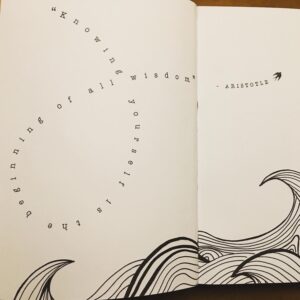
Self discovery prompts to deepen understanding of your beliefs and rules about time and being busy
– What was valued most highly in your family growing up?
– What did you learn about using/spending time?
– Try finishing these sentences (don’t overthink, go with what comes to mind)
If I’m not being productive then…..
If I spend time relaxing then……
If I work hard then…….
If I use my time wisely then……..
If I take a break then……..
If I have nothing to do then……
If I waste time then……
If I’m seen to be resting then……
Self-discovery prompts to help you reconnect with your body
– Scan your body slowly from the tips of your toes to the top of your head. Notice the sensations of aliveness and see if you can gather some information to help you build a picture of how it is in your body today.
– Take some slow, deep belly breaths. See if you can follow the path of your breath as you inhale, through your nostrils, into your throat and chest. Notice that expansion in your lungs and belly. Notice where the inhale tips into an exhale and follow the path of your breath as your belly and chest contract. Maybe notice the sensation of your out-breath on your lips or the area just below your nostrils.
Self-discovery prompts to help you lean into your emotions.
– Where do I experience this emotion in my body?
– What colour, shape, texture, weight, consistency would this emotion have?
– What would this emotion sound like?
– What words of advice would this emotion have for me if it could speak?
– What does this emotion need from me?
If you found this helpful and/or want to know more.
If you would like to know more or if you’d like some support in navigating your thoughts and feelings then do get in touch. You can book in for a guided self-discovery session via the link below.
https://making-your-way.selectandbook.com/
If you’d just like to dip a toe into deepening self-knowledge then my guided journal could be just the thing – You can buy one here:
https://makingyourway.co.uk/product/guided-journal/
Alternatively:
Email hello@makingyourway.co.uk
Mobile 07950454247
DM on Instagram @navigationforliving or @menopausepsychotherapist